Start with the full kit price
The mistake is comparing only the camera body price. A $65 camera with no charger, no battery, and an odd memory card can cost more than a $95 complete kit. Before you buy, check the battery, charger, memory card, and card reader. The battery guide, memory card guide, and card reader guide are more useful than a perfect-looking listing photo.
Under $100, avoid chasing the rarest viral model. Look for cameras that still have strong practical value: AA battery bodies, SD or SDHC storage, and sellers who show the screen, lens, and flash working. If you are new to used cameras, a boring complete kit usually beats a famous but untested body.
Good under-$100 models to check first
- Canon PowerShot A590 IS2008, 8.0 MP effective, 1/2.5-inch CCD, SD/SDHC support, and 2x AA batteries. This is one of the easiest low-risk starts because batteries are simple.
- Canon PowerShot A570 IS2007, 7.1 MP effective, 1/2.5-inch CCD, SD/SDHC card support, and 2x AA batteries. A good fallback when the A590 IS is overpriced.
- Kodak EasyShare C6132007, 6 MP, 1/2.5-inch CCD, SD/MMC storage, and 2x AA batteries. Check that the listing includes a working flash photo.
- Casio Exilim EX-Z602006, 6 MP, 1/2.5-inch CCD, SD/MMC storage, and Casio NP-20 battery. Small and pocketable, but confirm charger support.
- Canon PowerShot SD1000 DIGITAL ELPH2007, 7.1 MP effective, 1/2.5 inch type CCD, SDHC / SD / MMC cards, and NB-4L battery. Often costs more now, but still worth watching.
- Sony Cyber-shot DSC-W552007, 7 MP effective, 1/2.5-inch CCD, Memory Stick Duo / PRO Duo, and NP-BG1 battery. Budget-friendly only if the card path is included or cheap.
- Nikon COOLPIX S2202009, 10.0 MP effective, 1/2.33-inch CCD, SD/SDHC cards, and EN-EL10 battery. Slim, common, and easier to set up than many odd-card cameras.
- Fujifilm FinePix J102008, 8 MP effective, 1/2.5-inch CCD, xD/SD/SDHC/MMC support, and NP-45 battery. A practical Fuji when older Super CCD models are too expensive.
How to avoid a fake bargain
Ask for proof that the camera powers on with its own battery, extends the lens, focuses, fires flash, and writes a photo to the card. A listing that says "untested" can still be interesting, but do not pay tested-camera money for it. Read the untested camera guide before treating a parts listing like a working camera.
Under $100 should not mean accepting every flaw. Cosmetic scratches, worn labels, and a missing wrist strap are normal. A cracked screen, loose battery door, stuck zoom, corrosion, or no way to prove the flash works should change the price dramatically. If two listings cost the same, choose the one with a boring but complete accessory set over the one with better photos and vague condition text.
Battery type matters most. AA cameras such as the Canon A-series and Kodak C613 are friendly for beginners because rechargeable NiMH AAs are easy to replace. Small lithium cameras can be better for pockets, but only when the battery and charger are named clearly. If a seller says "needs charger" and the battery is missing too, price the whole setup before clicking buy.
Card type is the next filter. SD and SDHC are easiest. Memory Stick, xD-Picture Card, and older SD/MMC limits can still work, but the reader and maximum card support matter. If a seller includes a card and shows a photo written to it, that reduces risk. If not, check the camera page before buying.
Finally, leave room in the budget for failure. Used compact cameras are old consumer electronics, not new tools with warranties. If you spend the full $100 on the body alone, a weak battery or missing reader can turn a fun buy into a repair project. A $70 complete kit is often the smarter purchase.
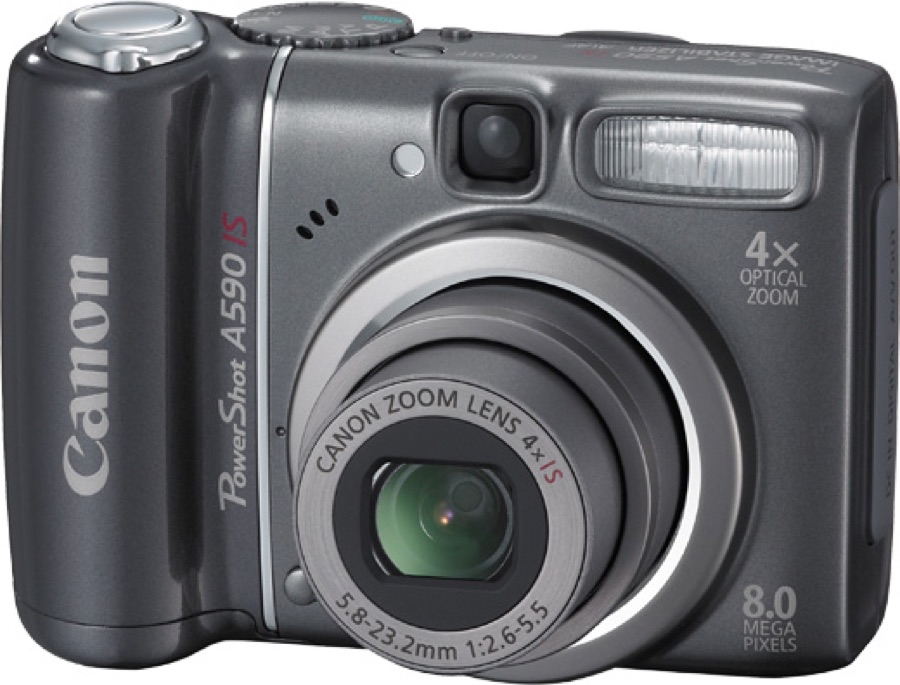
Canon PowerShot A590 IS: a practical cheap-camera pick because it uses AA batteries and SD/SDHC storage.
Next step: compare an AA-powered option like the Canon A590 IS with a pocket option like the Canon SD1000, then run the used camera checklist.