What the sensor label does and does not tell you
Many early compact cameras used CCD sensors, and many later compact cameras moved to CMOS. People often connect CCD with punchy daylight color, hard flash, and a less polished file. That can be true, but it is not a guarantee. A CCD camera with a bad lens or broken flash will not give you better photos than a clean CMOS compact with a working battery and card.
The useful way to think about it is simple: the sensor affects the raw capture, while the camera's lens, flash, metering, compression, and color processing decide how the JPEG feels. Old compacts usually have small sensors, limited dynamic range, and heavy in-camera choices. That is why they can look different from phone photos even before you edit them.
CCD examples worth comparing
The Canon PowerShot SD1000 DIGITAL ELPH is a 2007 compact with 7.1 MP effective resolution, a 1/2.5 inch type CCD, SDHC / SD / MMC storage, and an NB-4L battery. The Canon PowerShot G9 is also from 2007, but it uses a larger 1/1.7-inch type CCD, 12.1 MP effective resolution, SDHC / SD / MMC storage, and an NB-2LH battery. Both are CCD cameras, but they do not feel the same in the hand or in files.
Fujifilm adds another path. The Fujifilm FinePix F31fd is a 2006 model with a 6.3 MP effective 1/1.7-inch Super CCD HR sensor, NP-95 battery, and xD-Picture Card storage. The Sony Cyber-shot DSC-W55 is a 2007 7 MP 1/2.5-inch CCD compact with Memory Stick Duo / PRO Duo cards and NP-BG1 battery. Both can be attractive, but the storage path is less beginner-friendly than SD.
CMOS does not mean bad
Later CMOS compacts can be cleaner, faster, and easier to use. The Canon PowerShot G7 X Mark II is a 2016 camera with a 1.0-inch 20.1-million effective-pixel CMOS sensor, 24-100mm equivalent lens, SD / SDHC / SDXC storage, and NB-13L battery. It will not behave like a 2007 pocket CCD camera, but it is popular because it gives a polished compact-camera look with better low-light ability.
The Canon PowerShot ELPH 360 HS is also a 2016 CMOS compact, with a 20.2 MP effective 1/2.3-inch CMOS sensor, 25-300mm equivalent 12x zoom, SD / SDHC / SDXC cards, and NB-11LH battery. If your priority is easy files, zoom range, and common cards, CMOS may be the better buy. If your priority is older flash character, CCD is usually where to start.
Buy for the look, then verify the setup
If you want the older look, pick a CCD camera that fits your real shooting habit. For pocket flash and simple cards, start with SD-card Canons. For a different Fuji character, check the Super CCD models, but price xD-Picture Card storage before buying. For Sony Cyber-shot style, remember that Memory Stick cards and readers may be part of the cost.
Also compare output at the size you actually post. A phone screen hides many flaws, while a laptop crop shows noise, smeared detail, and missed focus. The CCD look is usually most charming when the subject, flash distance, and scene fit the camera. If you expect clean indoor files at long zoom, a later CMOS compact or a modern camera may be a better match.
Do not buy only from a sensor keyword. Ask for a fresh sample photo from the exact camera, a photo of the screen, and proof that the flash works. Then check the battery, maximum memory card guidance, and reader path on the model page. The used camera checklist is still more important than winning an argument about sensor technology.
For most buyers, the best test is emotional and practical: do you like the straight-out-of-camera JPEG, and can you get those files off the card easily? If both answers are yes, the sensor type has done its job. If either answer is no, keep comparing.
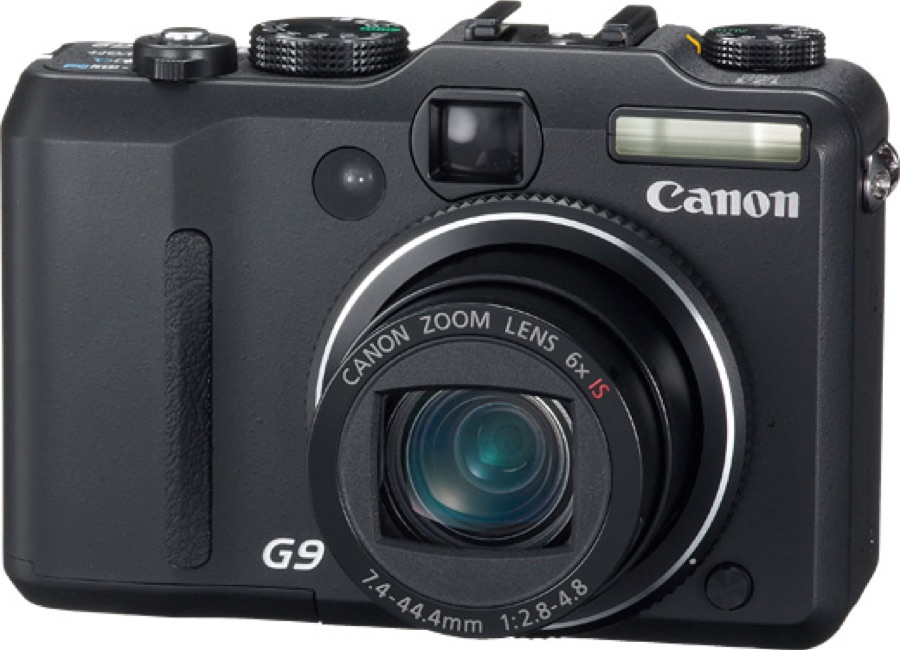
Canon PowerShot G9: a 2007 CCD compact with a larger 1/1.7-inch type CCD and SDHC / SD / MMC storage.
Next step: compare one classic CCD page such as the Canon G9 with one later CMOS page such as the Canon G7 X Mark II, then decide whether older character or easier performance matters more.